Chroma Keyboard
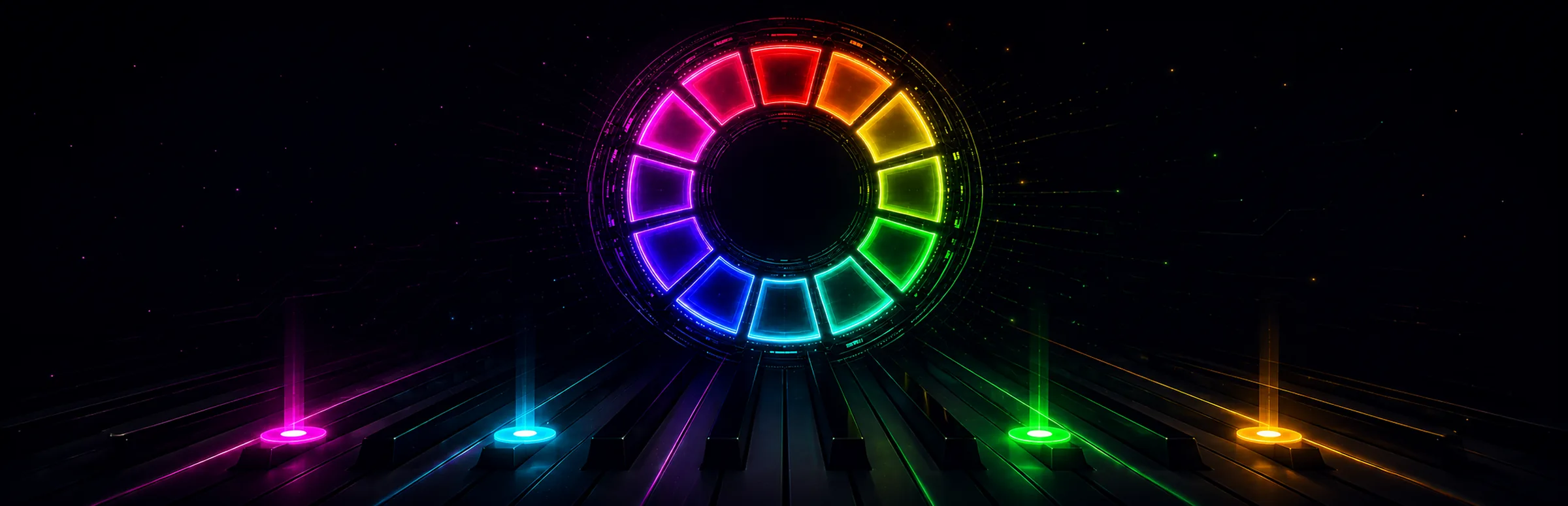
Twelve glowing colour segments arranged in a ring above a piano keyboard

Chromatic RhythmChroma
Keyboard

A calm four-key rhythm game with no fail state: every run plays to the last note. Forty original tracks span twelve traditions — kora, gamelan, maqam, milonga, techno — plus four Epics: ten-act suites, fifteen unbroken minutes each.
01 · Nothing to fail

No health bar. No failure gauge. No run that ends early.

Miss a note and the game says so — and then the song keeps playing, to the last bar, every time. Chase a rainbow star. Chase a full combo. Or put a track on and play it badly for an hour. The game does not mind.

±80 msPerfect
±160 msGood
2.2 sFall time
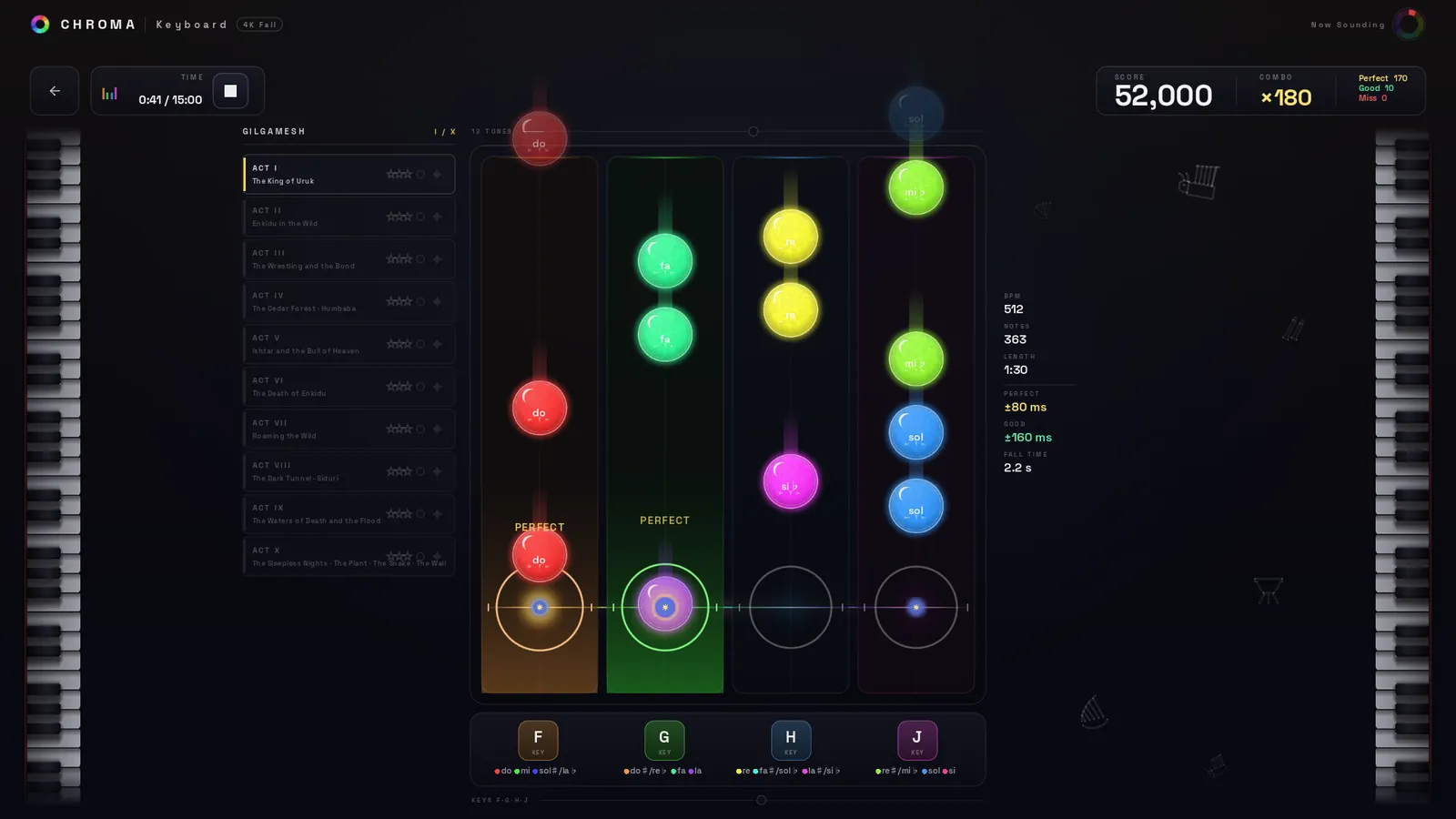
The play screen: four lanes of falling coloured notes, with the score and combo at the top right

02 · Twelve traditions

Forty songs, arranged as a map

Not a genre list. Each tradition brings its own instruments, its own drum patterns, and its own colour scheme for the entire screen.

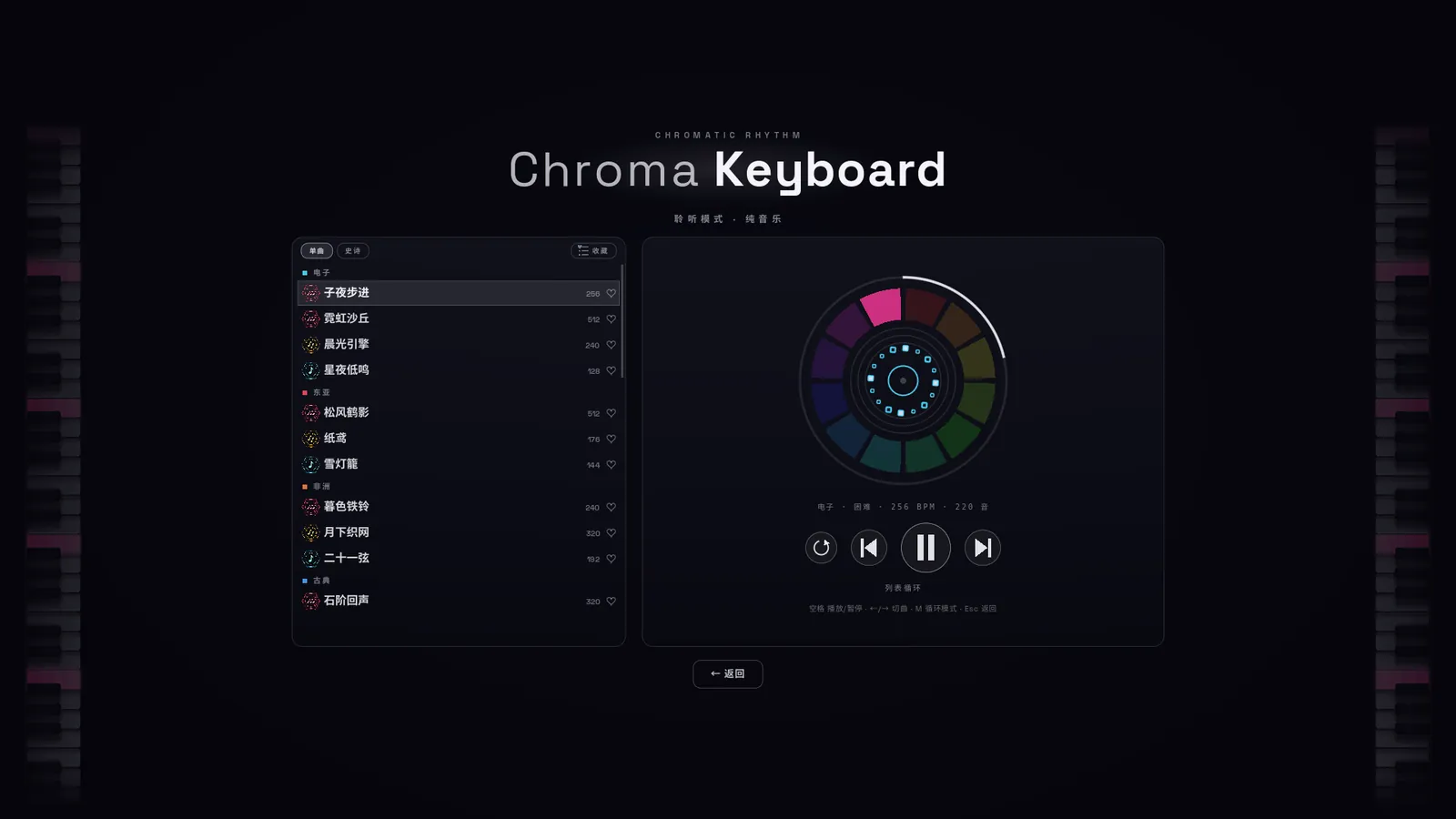
A listening mode, if you would rather just hear them — in the game, or right here in your browser.

The listening screen: the forty songs grouped by tradition, with a colour-wheel player alongside
The listening mode, in the game.

03 · Four Epics

Ten acts. Fifteen unbroken minutes. One sitting.

The Epics are the long form, and they are the reason this game exists. The acts do not stop between them. Three of the four are scored for orchestra — oboe and flute carrying the line, harp and pizzicato strings answering. The Bhagavad Gita leaves that palette entirely: a tanpura drone holding the stopped time, tabla playing theka, bansuri above.

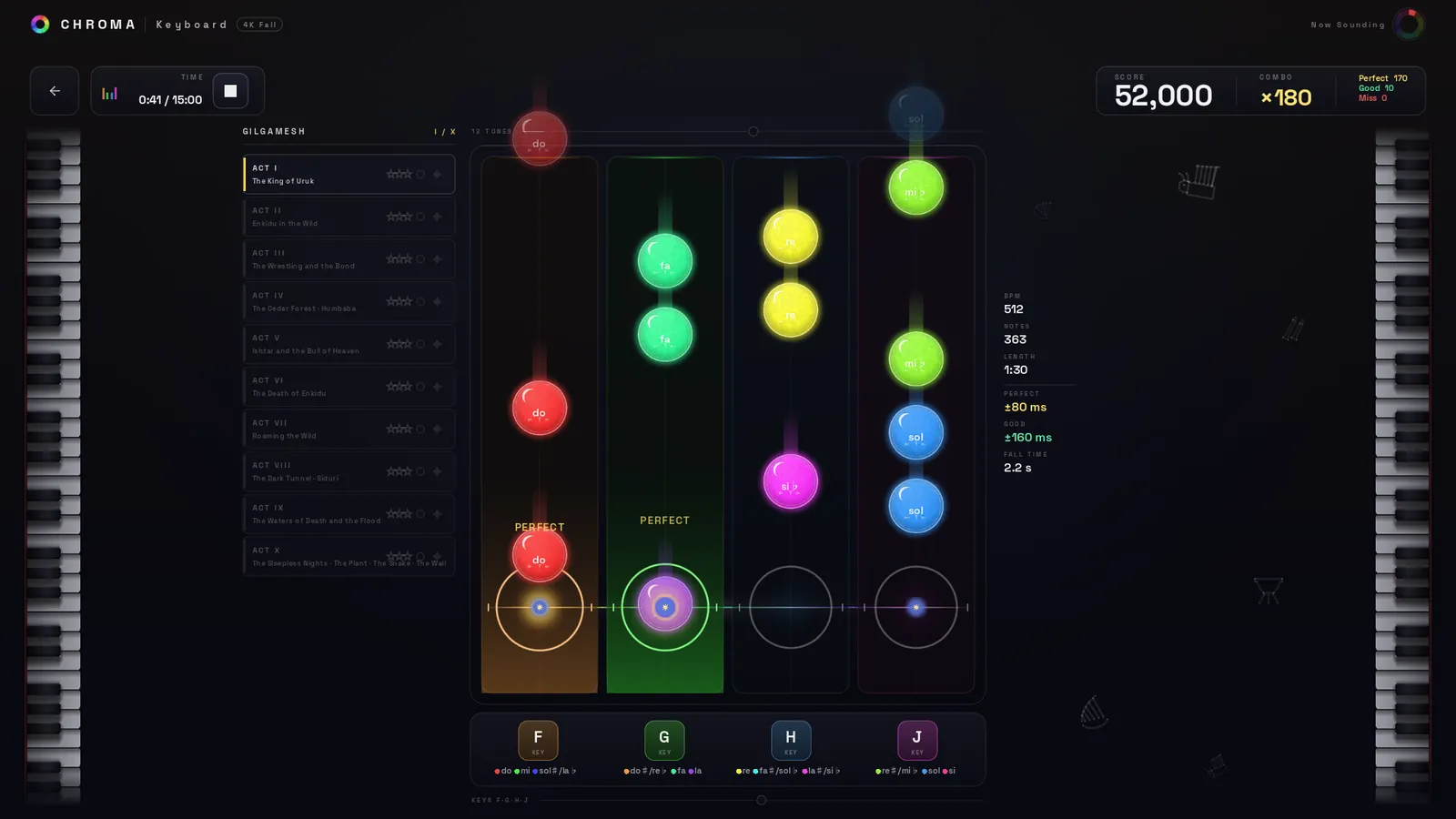
Gilgamesh in progress: the ten acts listed down the left, Act I highlighted, the clock reading 0:41 of 15:00
Gilgamesh, Act I. The ten acts run down the left; the clock counts the whole fifteen minutes, not the act.

04 · Twelve tones on four keys

Notes arrive as colour

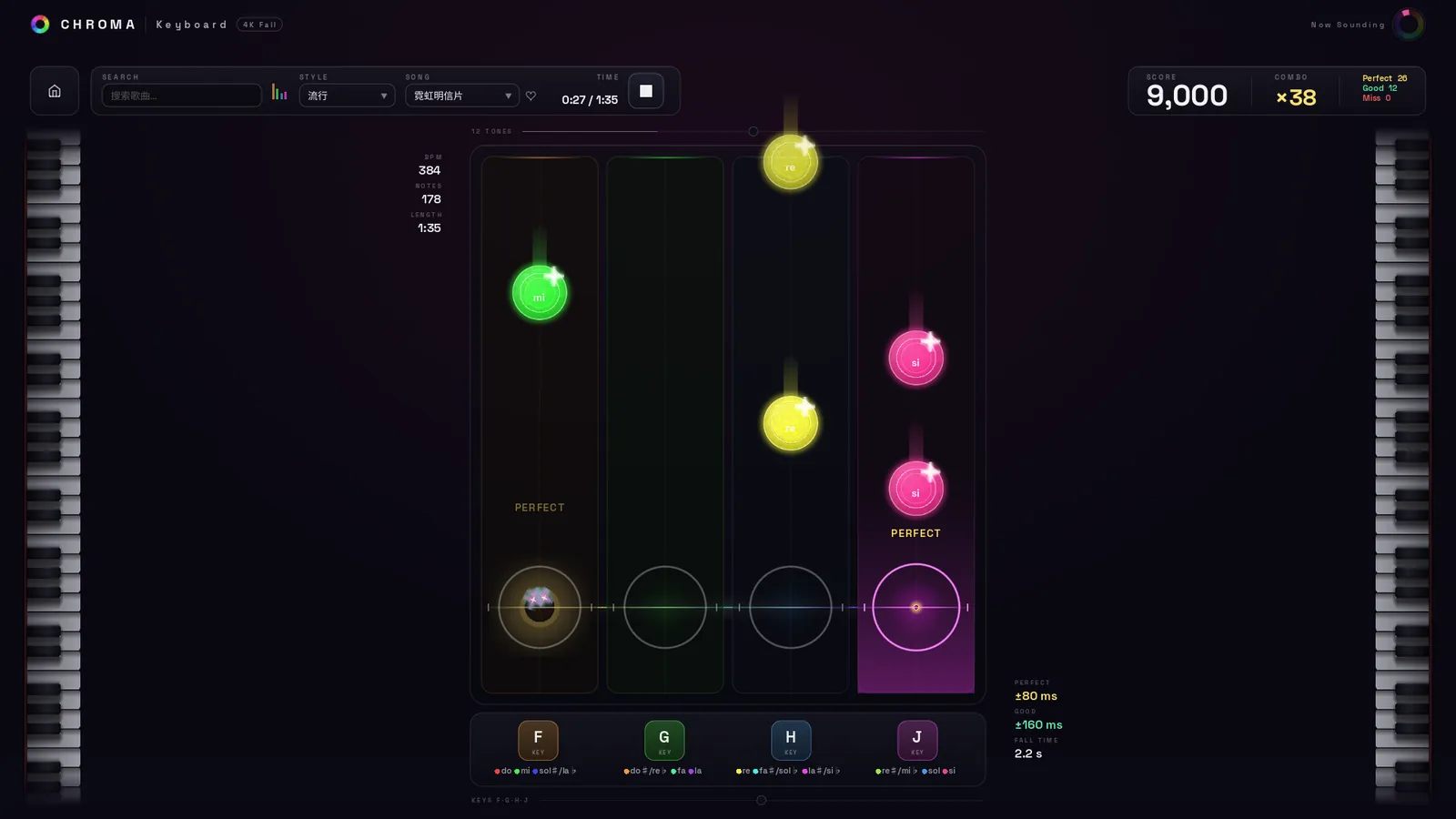
Every key carries three of the twelve notes, and the colour tells you which. The mapping is fixed. The consequence is that a scale is not a straight line across the board: stepwise motion crosses lanes, and the interval you hear is the distance you move.

The play screen in Simplified Chinese, the four key caps along the bottom each showing its three tones
The four key caps, each with its three tones — here in Simplified Chinese, one of thirty-one languages.

Eighty pieces of music, and nothing anywhere that can throw you out.

Take as long as you like.

Play the demo Wishlist on Steam